TriBsyn® Science
What is TriBsyn®?
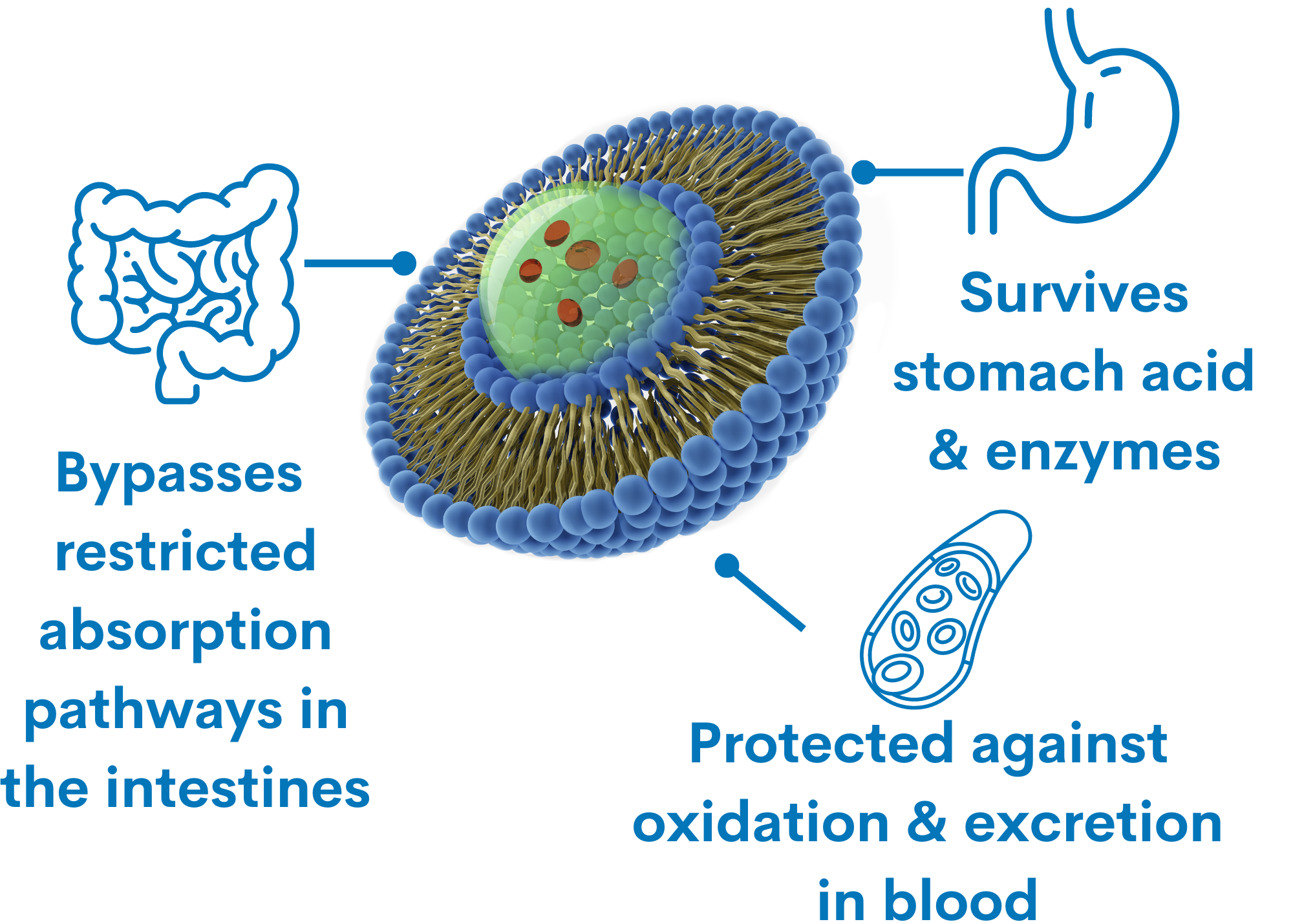
TriBsyn® is a carnosine-support ingredient derived from CarnoSyn® beta-alanine and formulated using Hydro Oleo technology. This patent-pending approach is designed to enhance bioavailability and delivery efficiency, enabling efficacious dosing at lower inclusion levels while reducing the likelihood of paresthesia. TriBsyn® also supports improved particle uniformity, flowability, stability, and reduced clumping, making it well suited for a wide range of formulations.
Beta-alanine is the rate-limiting precursor in carnosine synthesis. TriBsyn® has been evaluated in clinical settings for its ability to increase beta-alanine availability and support carnosine production. TriBsyn® demonstrated up to 4x greater bioavailability than conventional beta-alanine, along with a longer apparent half-life, under controlled clinical study conditions.
The Hydro Oleo Advantage
TriBsyn® is differentiated from conventional beta-alanine through its Hydro Oleo delivery system, which is designed to enhance absorption while minimizing sensory side effects such as paresthesia.
In a randomized, double-blind clinical study, TriBsyn® demonstrated improved bioavailability and was associated with minimal reported incidence of paresthesia at the tested dose. Sensory effects were evaluated using validated tools, including the Visual Analogue Scale (VAS) and Qualitative Light Symptoms Inventory (QLSI).
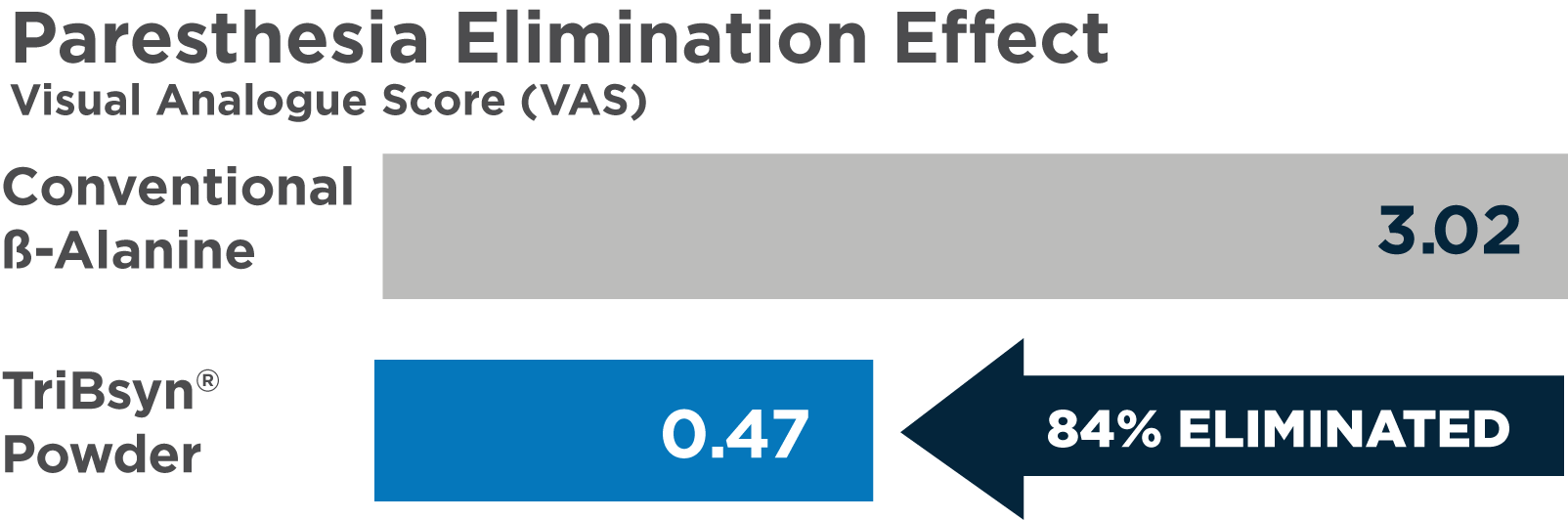
At an equivalent 400 mg dose, TriBsyn® scored 0.62 on the Visual Analog Scale for sensory discomfort, compared to 2.02 for conventional beta-alanine at 400 mg and 4.01 at 1200 mg. These findings indicate reduced sensory discomfort alongside enhanced delivery efficiency.
Bioavailability Matters: Greater Benefits for Mitochondrial, Muscle and Brain Health
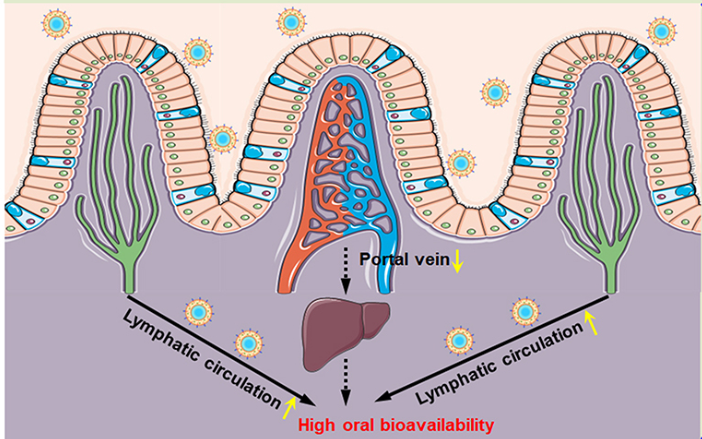
Dual Absorption Mechanisms: Intestinal Lymphatic System and Portal Vein
1. Intestinal Lymphatic Absorption:
Hydro Oleo technology enables an engineered structure that may support transport through the intestinal lymphatic system, contributing to enhanced systemic availability and a modified absorption profile.
2. Portal Vein Absorption:
A portion of beta-alanine is also absorbed through the traditional portal circulation pathway associated with water-soluble beta-alanine absorption.